

The Eduqas Film Studies A Level course is designed to introduce A-level learners to a wide variety of films in order to broaden their knowledge and understanding of film and the range of responses films can generate. Film is one of the main cultural innovations of the 20th century and a major art form of the last hundred years. Film students will investigate how film works both as a medium of representation and as an aesthetic medium. They will look at the contexts of films, both in terms of industrial production conditions (which can vary widely according to time and place) and the cultural, social and historical circumstances to which the film ‘speaks’ and out of which it arose.
What will I learn?
Students deepen their understanding, appreciation, and enjoyment of cinema by exploring the language of film through its constituent parts such as cinematography, lighting, mise-en-scène, sound, and editing. Film Studies is also a subject that by its nature requires students to consider the ethical, social, ideological and cultural issues expressed in narrative. We discuss issues such as censorship and the portrayal of gender, nationality, ethnicity, and class stereotypes. Students sample a wide array of films from around the world, from Hollywood classics to British independent films, European cinema and global films from Turkey, Iran, Cameroon and Hong Kong. The course provides learning across a broad range of texts in a variety of genres and styles, such expressionist cinema, silent film, documentary and short films.
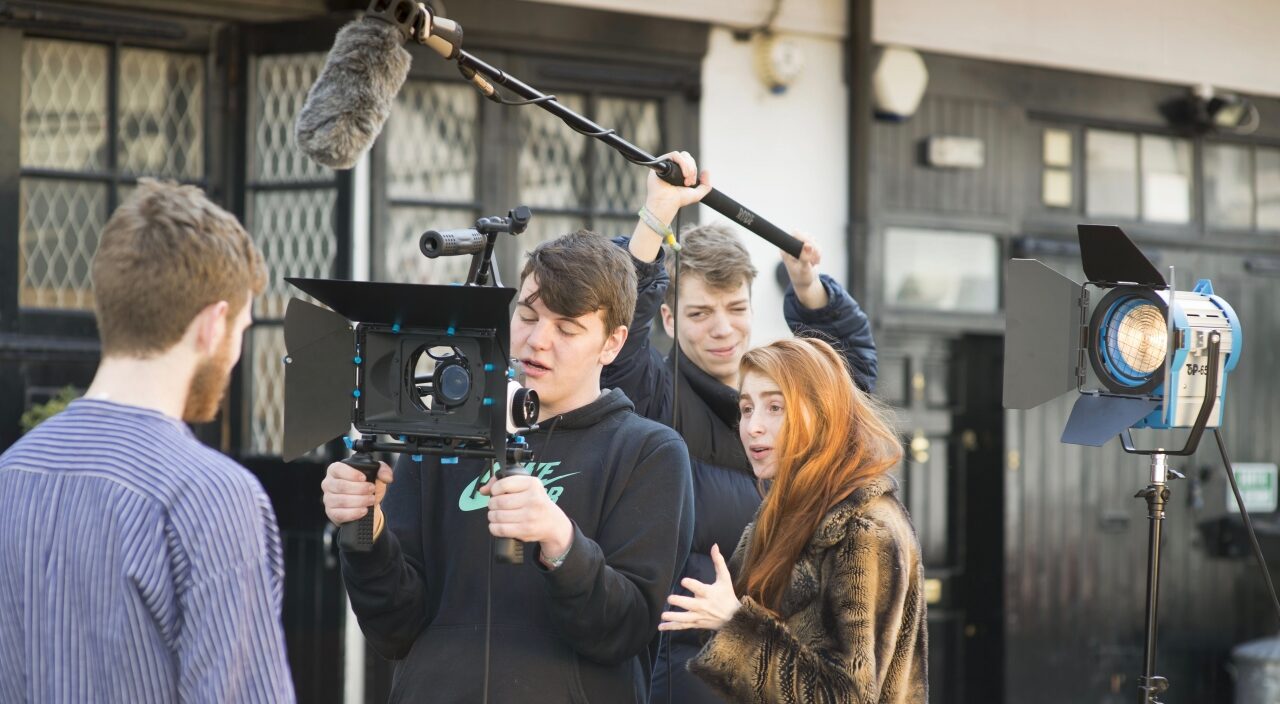
The course encourages students to develop strong skills of critical analysis and personal reflection as well as developing their creativity and practical skills. Students will be required to produce a short film or screenplay and reflect on their creative process. This will allow students to apply their learning to a creative production of their own and gain practical experience.
The new specification for first assessment in 2025 introduces new contemporary films, reflecting the changing landscape of cinema and providing students with a more diverse range of films to study. Students will be required to analyse films in detail, examining their themes, techniques, and cultural significance. They will also be expected to evaluate different critical frameworks and develop their own critical voice.
The Eduqas Film Studies A Level course prepares students for careers in the media and/or film industry and lays the groundwork for further theoretical study at university. Many of the skills of critical analysis that we use are transferable across a broad range of disciplines.
For coursework students have the option of making their own short films, or writing screenplays accompanied by digital images in the form of a storyboard.
Component 1: Varieties of film
Hollywood 1930 – 1990 (comparative study)
American film since 2012 (two film study)
British Film since 1995 (two-film study)
Component 2: Global filmmaking perspectives
Global film (two-film study)
Documentary film
Film movements: Silent cinema
Film movements – Experimental film (1960 – 2000)
Component 3: Production
This is the practical coursework component and requires candidates to produce one 4-5 minute film OR a screenplay and digital storyboard (1600 – 1800 words). Both options also require a 1600 – 1800 word evaluative analysis of the product.
ASSESSMENT
Assessment involves both coursework (30%) and two written examinations of two and a half hours each (35% each). Students have an opportunity to demonstrate their knowledge of both theory and practical skills. Students are expected to apply a range of critical approaches such as ideological critical studies, auteur critical approaches and filmmakers’ theories (for documentary). Core study areas for all films include an understanding of the key elements of film form (cinematography, lighting, mise-en-scene, editing and sound), issues of representation and film contexts, including institutional production.
In recent years students have visited the London Cinema Museum; they have taken part in (and won!) a national film review-writing competition; they have interviewed survivors of female genital mutilation and made a documentary on this, later raising over £10,000 for an anti-FGM billboard campaign. Students have also visited Ealing Studios and have been invited onto the set of a recent Guy Ritchie film, affording them the opportunity to understand the different environments within which films are created.
Some previous students have gone on to follow degree courses in Film Studies, Film Production and Technology, Media Studies, and Philosophy and Film at universities including Oxford Brookes, Birmingham City University, University of Sussex, Kingston University, Stafford University, London Met Film School, and Emerson College (US).
No previous subject knowledge is required.
Examination Board: EDUQAS